
Uncategorized
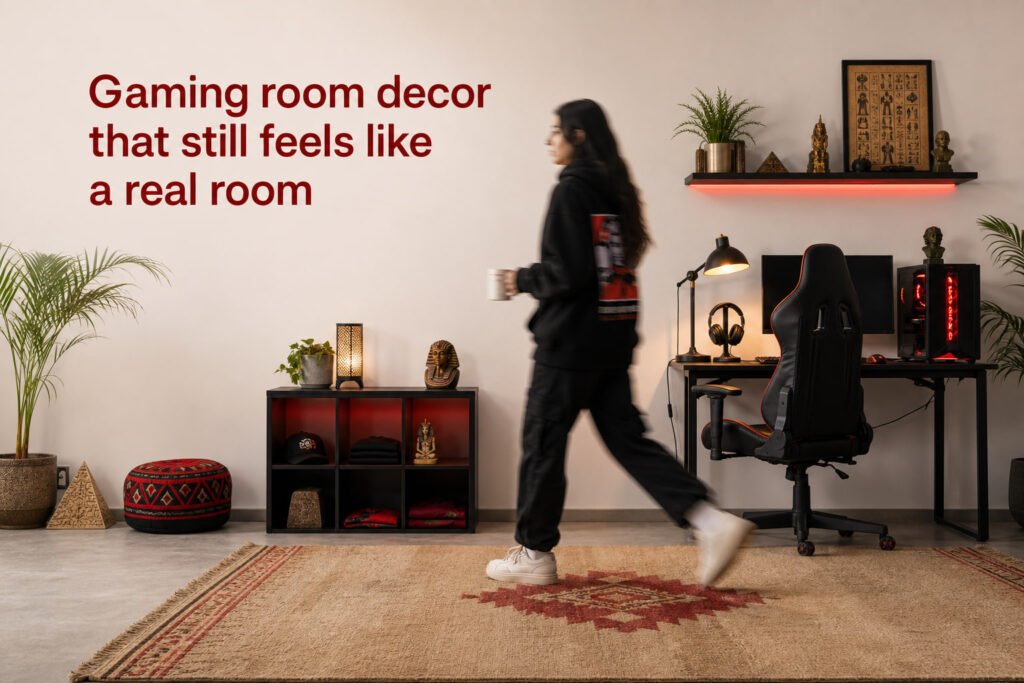
Gaming room decor that still feels like a real room
Aug
gaming room decor works best when it edits the room instead of trying to prove you are a gamer from every angle. The payoff is simple: better pieces make the setup feel sharper, the room feel calmer, and your merch look more expensive than it is. If you are deciding what is actually worth buying, start with balance, scale, and finish quality, not with the loudest print or the biggest logo.
What makes gaming room decor feel intentional instead of crowded?
Intentional rooms usually follow one visual hierarchy: one focal zone, one supporting palette, and several quieter pieces. Crowded rooms fail because every item asks for attention at the same volume. The fastest fix is to let the desk wall carry the gamer identity, keep the side walls lighter, and repeat only two or three colors across the room. That gives you theme consistency without turning the space into a merch dump.
What should you look for in gaming room decor? Choose pieces that match your color palette, fit the room size, respect desk-to-wall balance, use clean materials and finishes, control visual clutter, and support the setup instead of competing with it. The best decor strengthens one clear theme rather than stacking random gaming references.
How color and theme should work together
Color should lead theme, not the other way around. If your setup already has black peripherals, white walls, and cool RGB, then blue, silver, and muted violet will usually sit better than adding five unrelated accent colors just because they reference different games. Brand-specific gamer references work best when they share a visual language, such as the same line weight, background tone, or frame style.
Why balance matters more than filling every wall
Desk-to-wall balance matters because the desk already contains visual mass: monitors, speakers, keyboard, mic arm, and cables. If you fully load the wall above it with large posters, flags, shelves, and LEDs, the room starts feeling top-heavy. Leave visible blank space around the main display piece. Negative space is not emptiness; it is what makes the focal item read clearly.
- Use one dominant wall piece above or beside the desk, not three equal-size ones.
- Keep secondary decor lower contrast than the centerpiece.
- Repeat shapes deliberately, such as one framed print and one shelf, instead of mixing unrelated forms everywhere.
Which pieces should stay subtle
Small utility items should stay quiet. Mugs, cable trays, mouse pads, storage bins, and desk-edge accessories should support the room through color and finish, not through extra graphics on every surface. If you want decor that matches a gaming setup, the smartest move is often to make the practical items visually cleaner so the statement pieces can do the talking.
Which decor pieces usually pull the room together best?
The best unifying pieces are wall art, one or two display surfaces, and soft accents that repeat the setup colors. These work because they cover the three layers people actually notice in a room: eye-level focus, mid-level organization, and background texture. A room rarely feels finished from collectibles alone. It feels finished when hard surfaces, fabric, and wall space all speak the same style.
Wall art and posters
Posters do the most work per square foot because they define the room from a distance. One larger print usually reads better than several tiny ones scattered around. Place wall art so its center sits near seated eye level if it is beside the desk, or slightly higher if it is above furniture. Matching frames instantly reduce visual noise because they turn different prints into one system. For comparison help, see Which Gaming Poster Style Fits Your Setup Best.
Mugs, shelves, and small display items
Small objects pull a room together only when they are grouped, not sprinkled. A shelf with three to five related items reads as a collection. The same five items spread across the room read as clutter. Use mugs, mini figures, or small branded pieces in one controlled zone, preferably near storage or on a shelf rather than across every open surface.
Textiles and soft accents
Textiles are underrated because they soften the tech-heavy feel of a gaming room. A throw, cushion, curtain, or rug can repeat your accent color without adding more logos. Fabric also helps the room feel lived in, which is exactly what stops it from looking like a temporary setup in a spare corner.
If your wall art already carries the jokes or references, let textiles carry texture instead. Matte fabric, knit surfaces, and slightly heavier weaves look better than shiny, thin material because they catch less glare from monitors and LED strips.
How do you choose decor that matches your setup style?
You choose matching decor by reading the setup’s actual personality, not by copying a trend board. Look at line density, color temperature, and how much visual aggression the setup already has. A clean competitive rig wants restraint. A fandom-led setup can hold louder references. A shared room needs decor that can shift between gaming mode and normal room mode without looking out of place.
Competitive and minimalist setups
Minimalist competitive setups usually look best with limited graphics, sharper typography, and fewer but larger pieces. Think one poster with a strong slogan, one clean desk accessory, and lighting that outlines the space rather than floods it. If your keyboard, mouse, and monitor already create a technical look, extra novelty decor often weakens the setup instead of strengthening it.
That is where articles like Gaming Room Decor That Feels Competitive, Not Messy become useful: the goal is controlled intensity, not random hype.
Bold fandom-led setups
Fandom rooms can carry more personality, but they still need one anchor franchise or one emotional lane. If you mix League references, anime palettes, neon signage, and meme posters with no common thread, the room starts reading as a collage. A better approach is to choose one dominant universe, then use smaller nods from others through mugs, sleeves, or shelf items.
Shared rooms and mixed-use spaces
Mixed-use rooms need decor that still works when the PC is off. That means choosing pieces that read as design objects first and gamer references second. Framed prints, monochrome slogans, and storage pieces in neutral finishes survive much better in a bedroom, study space, or shared apartment than giant novelty graphics on every wall.
- Match cool white lighting with cleaner, higher-contrast decor.
- Match warm ambient lighting with softer prints and fabric texture.
- Match loud RGB with fewer graphic elements, not more.
What should you check before buying pieces for a small room?
In a small room, check scale, storage impact, and visual noise before anything else. Most buying mistakes happen because shoppers judge a product in isolation instead of in relation to the desk, bed, door swing, and walking path. Small rooms do not need tiny decor only. They need fewer interruptions. One correctly sized piece can make a room look larger than six small items fighting for space.
Scale and placement
Measure the empty wall, not the product image. A print that looks balanced online can dominate a narrow wall once it sits above a dual-monitor setup. Leave breathing room around corners, shelves, and monitor edges so the wall does not feel compressed. Good gaming room decor ideas for small spaces usually rely on vertical emphasis, such as one narrow flag, one medium poster, or shelving that rises instead of spreads.
Storage and surface space
Every decorative object in a small room either consumes storage or creates a cleaning problem. Prioritize pieces that double as storage, organization, or surface control. A shelf that holds a mug, controller stand, and one framed item is doing more useful work than three separate decor purchases landing on the desk.
- Keep the desktop at least partly clear for actual play and daily use.
- Use wall-mounted storage before adding floor pieces.
- Choose closed or semi-closed storage if you already own many visual items.
Lighting and visual noise
Lighting temperature changes how crowded a room feels. Cool, bright light reveals every edge, cable, and print line, which can make a busy room feel even busier. Warm or diffused side lighting hides minor clutter and helps matte surfaces look richer. If the room is small, avoid stacking LED strips, neon signs, and glossy prints in the same sightline because reflections multiply the mess.
For more size-aware inspiration, Gaming Home Decor That Feels Like Your Rank shows how theme can stay strong without swallowing the room.
How can you mix gamer identity with everyday room style?
The best mix uses one loud signal and several quiet confirmations. That is how a room stays usable outside play time while still feeling unmistakably yours. The mistake is trying to make every object perform identity. Everyday room style survives when furniture, storage, and open space still have a job beyond showing fandom.
Using in-jokes without overdoing them
Use in-jokes where people naturally pause long enough to notice them: a framed slogan near the desk, a mug on a shelf, a cushion on a chair. Do not spread meme text across bedding, curtains, walls, and accessories all at once. Repetition kills the joke and the room.
Choosing one statement piece
Pick one piece that says gamer immediately, then let the rest support it. That statement piece might be a wall flag, a sharp poster, or a hoodie displayed on a hook with real graphic presence. A product like the Play Wall Flag for Gaming Rooms & Stream Setups works best when the surrounding wall stays comparatively quiet.
Keeping the room usable outside play time
Usability is the final filter. If decor blocks storage, eats desk space, throws glare into the monitor, or makes the room embarrassing to use for study, work, or guests, it is bad decor no matter how on-brand it is. The right decision rule is simple: buy pieces that still make sense with the screen off, in daylight, and from the doorway. That is the difference between a real room and a setup swallowed by merch.
