
Uncategorized
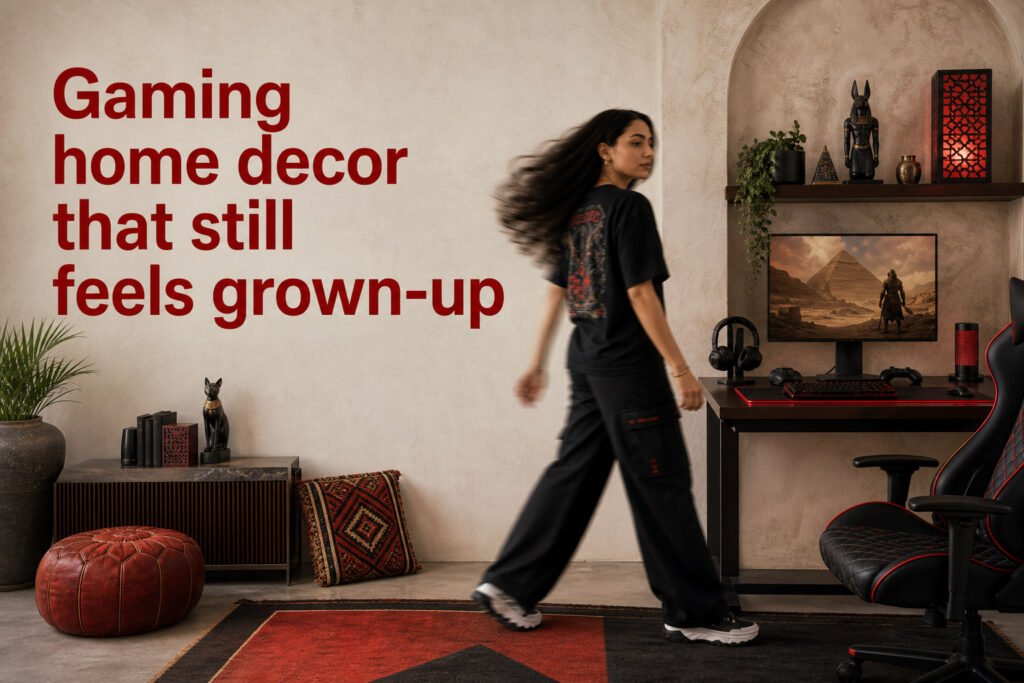
Gaming home decor that still feels grown-up
Aug
gaming home decor looks grown-up when the room reads as a complete space first and a fandom space second. That means fewer, better-chosen pieces, a tight palette, and decor that respects the furniture already in the room instead of fighting it. If you want your setup to signal taste rather than noise, the key is not buying less gaming-themed stuff at random, but choosing the right visual anchors and leaving enough empty space for them to work.
What makes gaming home decor feel stylish instead of cluttered?
Stylish gaming home decor uses restraint, repetition, and placement discipline. The room should have one visual story, not five competing ones. Most cluttered setups fail for the same reason: every item is trying to be the hero, so nothing looks intentional. A mature result comes from limiting your palette, choosing one or two statement zones, and making sure your decor echoes the room’s furniture lines, finishes, and mood instead of acting like a separate universe.
What makes gaming home decor feel stylish instead of cluttered?
- Choose two or three core colors and repeat them across art, textiles, and accessories.
- Use one statement piece per wall, not a scatter of small unrelated items.
- Leave visible negative space around posters or shelves so the eye can rest.
- Match decor tone to the room’s furniture, whether that is minimal, industrial, dark, or warm.
- Prefer a few larger accents over many tiny novelty items.
Choose a clear color palette
A clear color palette is the fastest way to make gamer decor feel intentional. If your chair, desk, curtains, and bedding are neutral, a bold print can work because the room already has control. If the room already has strong wood tones, RGB strips, and patterned textiles, your wall art should be simpler. Color palette mistakes usually happen when people buy by fandom first and room fit second.
Balance statement pieces with negative space
Negative space is not emptiness, it is framing. A single framed print with breathing room looks more premium than four smaller pieces pushed edge to edge. This is especially true for gaming home decor built around jokes, rank references, or competitive slogans, because the message lands better when the wall is not already crowded.
Match decor to the room’s existing furniture
Furniture decides whether your decor feels integrated. Black metal desks pair well with sharp graphics, monochrome art, and matte finishes. Softer rooms with wood, beige, or fabric headboards usually look better with muted prints, off-white margins, and warmer accent pieces. For a room-first approach, start with what is already large and permanent, then choose decor that reinforces it.
Which pieces give the biggest visual upgrade first?
Wall art gives the biggest upgrade first because it changes the room at eye level without adding physical clutter. After that, desk-side accents and textiles do the most work. The reason is simple: people read a room from the walls inward. A strong print, a clean flag, or a well-placed poster establishes tone immediately, while smaller objects only look good once that main visual layer is settled.
Wall art and posters
Start with one hero piece above the desk, bed, or side wall. A good gaming poster can define the room if its scale is right and its colors connect to the rest of the setup. Text-based designs, ranked jokes, or game references usually age better than overly busy montage art because they read cleaner from across the room and do not overload the wall with detail.
Desk-side accents
Desk accents matter most when they continue the same tone as the wall art. Think one mug, one sleeve, one mouse pad, or one small display object that repeats a phrase, icon, or color already used elsewhere. If every desk item carries a different joke or franchise, the desk stops looking curated and starts looking like storage. For more on that transition, see gaming accessories for desk that make a setup feel intentional.
Textiles and soft furnishings
Textiles soften the room and prevent the setup from feeling like a corner dropped into a bedroom. Cushions, throws, or a simple rug work best when they pick up one secondary color from the art rather than introducing a new loud accent. This is where many people can make gaming room decor feel more adult without buying more wall pieces at all.
How do you choose decor that fits your setup and your room?
Choose decor by reading the room in layers: architecture first, furniture second, setup third, fandom last. That order prevents impulse buys that look great on a product page but disconnected at home. A room with low ceilings, narrow walls, or a lot of open shelving needs simpler graphics and fewer large shapes. A bigger room with plain walls can handle bolder art because it has visual capacity to spare.
- Map the main sightline. Stand at the doorway and identify what the eye hits first. That is where your strongest decor piece belongs.
- Check the dominant materials. Matte black, wood grain, white laminate, and fabric upholstery all change which print styles feel natural.
- Decide the room’s role. Bedroom, office, and stream background spaces need different levels of visual energy.
- Choose one brand tone. Competitive, ironic, minimal, or loud can all work, but mixing all four usually looks immature.
- Limit accent categories. If you already have wall art and desk accessories, you may not also need flags, LED signs, shelves, and collectibles.
Desk-to-room flow matters more than people expect. If the desk area is sharp, black, and performance-driven, a pastel anime collage across the opposite wall may feel disconnected unless another element bridges the two. That bridge can be a frame color, a repeated phrase style, or a shared accent color. The room feels finished when the gaming references seem to belong to the same person, not to separate shopping moods.
Giftability is also a useful filter. If a piece would make sense as a gift because its message is readable, its quality is visible, and its style is not hyper-specific to one chaotic setup, it usually works better in a real room. That is one reason clean slogan prints and focused gamer wall art often outperform overloaded collage designs in everyday spaces.
What should you check before buying gaming wall art?
Check size, framing path, print finish, and wall placement before you buy. Most disappointment with wall art is not about the design itself, but about scale and surface. A design can be excellent and still look wrong if it is too small for the wall, too glossy for the lighting, or visually disconnected from nearby furniture. Buying well means judging the print in context, not in isolation.
Size and framing
Size should be driven by the wall zone, not by the product photo. Small prints can disappear above a wide desk or bed, while oversized pieces can crush a tight corner. Framing choices also change tone fast. Thin black frames feel crisp and modern. White borders can make bold graphics feel more gallery-like. Frameless posters feel more casual, which can work, but they usually need cleaner placement to avoid looking temporary.
Print style and finish
Finish affects both glare and perceived quality. Glossy prints punch harder and suit bold, high-contrast graphics, but they can reflect monitors and overhead lights. Matte finishes usually feel more refined in bedrooms or mixed-use rooms because they reduce glare and let typography or line work stay readable. If the design relies on subtle tones, matte often preserves the grown-up look better than high shine.
Where it will hang in the room
Placement decides whether art supports the room or interrupts it. Above the desk, the piece becomes part of the setup identity. Across from the bed, it becomes a room mood setter. Near shelves or a lamp, it has to compete with other shapes, so simpler compositions work better. If you are comparing styles, Which Gaming Poster Style Fits Your Setup Best is a useful next step.
A good buying test is this: can you describe exactly why the piece belongs in that spot? If the answer is only that you like the game, keep looking. If the answer includes color, scale, tone, and what nearby objects it connects to, you are buying decor rather than just merch.
What questions do people ask before buying gaming room decor?
Yes, gaming decor can look mature, but only if the room keeps a clear hierarchy. The room itself should lead, the setup should support it, and the fandom references should sharpen the identity rather than dominate every surface. That is the core rule behind better buying decisions.
How many gaming pieces should go in one room?
One room usually looks best with a few focal gaming pieces rather than decor on every surface. A strong wall piece, one or two desk accents, and one soft furnishing are often enough to establish identity. Add more only if the room still has visual space and the items repeat the same palette and tone.
Are posters or flags better for a grown-up gaming room?
Posters are usually better for a grown-up room because they create cleaner edges and are easier to frame. Flags work when the room leans casual, stream-focused, or graphic-heavy, but they need disciplined placement. If the goal is polish, framed prints beat fabric pieces more often than not.
What makes gamer wall art look premium?
Premium-looking gamer wall art has controlled composition, readable contrast, and a finish that suits the room’s light. It also fits the wall correctly. Clean typography, limited colors, and intentional framing often look more expensive than busy art packed with references, even when both pieces cost the same.
Is gaming home decor a good gift?
Gaming home decor is a good gift when the design reflects play style or humor the person actually uses, not just the game they play. Posters, mugs, and compact accents are safer than highly specific room pieces because they fit more spaces. For that angle, see Gaming Gift Ideas That Match Their Setup.
If you are choosing between two pieces, pick the one that still works when the monitor is off. That decision rule filters out most clutter buys and leaves you with decor that can live in the room for years, not just for one phase of your setup.
