Uncategorized
Why a League of Legends hoodie works beyond match day
Aug
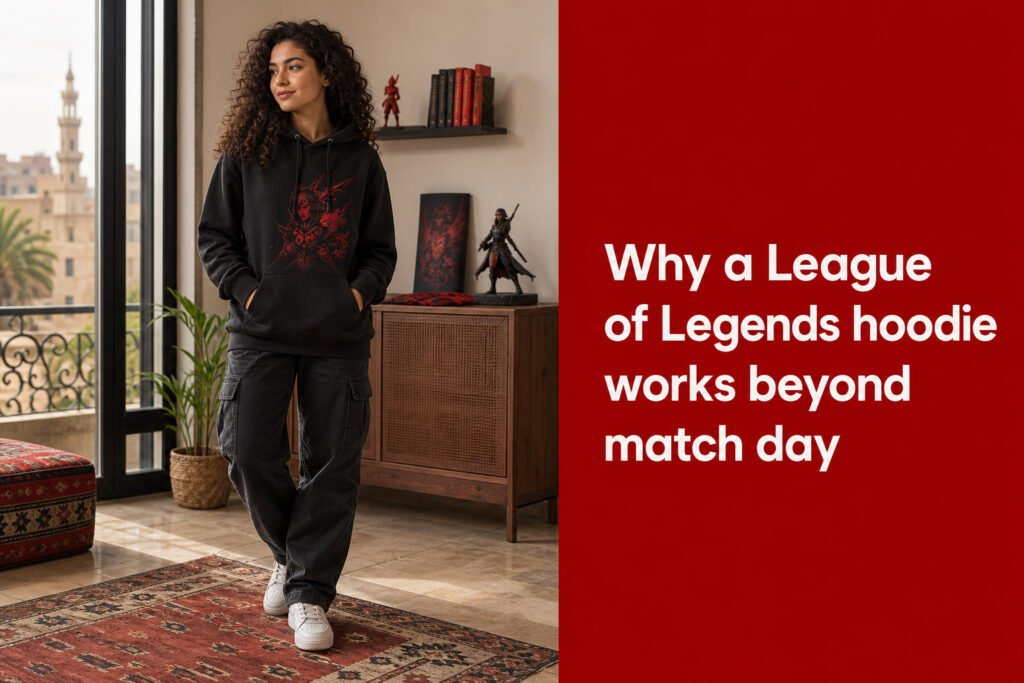
League of Legends hoodie choices work beyond match day when they balance three things at once: comfort, clean fit, and a game reference that does not scream costume. That is the real buying test. A hoodie you wear often has to survive commuting, desk hours, café stops, and repeat washes without turning into stiff merch or sloppy loungewear. If you want fandom gear that earns rotation in real life, judge fabric, cut, hood shape, and print restraint before you judge the champion art.
What makes a League of Legends hoodie feel wearable every day?
An everyday-wearable League of Legends hoodie feels like normal premium casualwear first and fandom merch second. The sweet spot is a cotton blend with enough structure to hold shape, a midweight fleece that does not overheat indoors, and a design reference that reads as intentional streetwear rather than event-only merch. That combination is why some hoodies leave the closet constantly while others become game-night-only pieces.
A quick buying filter helps. Look for these features first if you want a hoodie you will actually wear often:
- A cotton blend that feels soft inside but not thin or shiny outside
- Midweight fleece weight rather than very heavy winter-only bulk
- A fit and cut that leaves room for a tee underneath without ballooning at the waist
- Hood construction that keeps its shape instead of collapsing flat
- A game reference design that stays readable without covering the entire chest or back
- Print durability notes or care guidance that suggest the graphic can survive repeat washing
That is also why a LoL merch hoodie should be judged more like daily apparel than collectible merch. If the fabric pills fast, the cuffs twist, or the graphic dominates every outfit, you will admire it more than wear it.
Fabric and warmth
The best fabric for repeat use is usually a cotton-poly cotton blend, not pure polyester and not an ultra-thin cotton shell. Cotton gives softness and a less synthetic hand feel. Polyester helps the hoodie recover shape, resist shrinking, and dry faster after washing. Brushed fleece interiors feel warmer and softer, but if the fleece is too plush for the climate or your indoor setup, the hoodie becomes situational.
Fit, length, and layering
Daily wearability depends heavily on length and shoulder shape. A hoodie that ends too high at the waist rides up when you sit. One that runs too long can look like sleepwear unless the cut is intentionally oversized. The most useful cut is one that clears the waistband cleanly, leaves room through the chest, and still narrows enough at the hem and cuffs to layer under a jacket.
Print style and subtlety
Subtle graphics get worn more often. Small chest marks, sleeve hits, tonal prints, champion symbols, and in-jokes that other players recognize age better in a wardrobe than giant full-color artwork. Loud graphics are not wrong, but they narrow where you can wear the hoodie. If your goal is a gaming hoodie for daily wear, choose a design that still looks coherent when the viewer does not know the reference.
How do you judge quality before you buy?
You judge hoodie quality by construction details, not by the product mockup. The fastest tells are seam consistency, ribbing recovery, hood structure, and how the print is likely applied. A clean product photo can hide weak stitching or thin fabric, but it cannot hide missing specifications forever. If a listing says almost nothing about material, fit, or care, assume the garment itself is doing very little of the work.
Stitching and seams
Check shoulder seams, side seams, cuff attachment, and the pocket corners first. Straight, even stitching usually signals better assembly than loose thread ends or visibly wavy joins. Double-needle stitching around stress points matters because hoodies fail where they are pulled repeatedly: pocket openings, cuffs, hem, and neckline. A crooked kangaroo pocket is not only cosmetic. It often hints that the whole garment was sewn with loose tolerance.
Hood shape and drawcords
A good hood stands with some shape when off the head and sits without pulling the neckline tight when worn. Thin single-layer hoods often collapse flat and feel decorative rather than functional. Drawcords are a smaller clue, but still useful. Cleanly finished eyelets and cords that do not fray quickly suggest better finishing. If the hood looks tiny in photos, expect it to bunch awkwardly behind the neck.
Colorfastness and print durability
Print durability depends on both the print method and the garment surface. Smooth, stable fleece faces usually hold printed graphics better than fuzzy, irregular surfaces. Large solid blocks of ink can crack sooner than smaller or more flexible designs because the print has to stretch every time the chest and pocket area moves. Dark hoodies with high-contrast graphics also show wear sooner if washed hot, dried hard, or ironed over the print.
Before buying, read the care notes. Cold washing, turning the garment inside out, and avoiding high dryer heat are not optional extras for graphic hoodies. They are the difference between a design that stays sharp and one that starts looking tired after a short run of washes. For a broader breakdown of garment checks, see Which Gaming Hoodie Features Matter Most Before You Buy?.
Which details matter most for comfort in real use?
The comfort details that matter most are inner softness, pocket usability, and weight relative to where you will actually wear the hoodie. Buyers often focus on the artwork and forget that real comfort shows up after three hours at a desk, on a walk, or under a jacket. A hoodie can feel great for five minutes and still become annoying because the hem rides up, the pocket sags, or the fleece traps too much heat.
Softness is good, but structure matters just as much. An extremely brushed interior feels cozy at first touch, yet some very soft hoodies lose shape quickly and start clinging at the elbows and waistband. A better balance is soft inside with enough body outside to keep the silhouette clean. That matters more if you want a hoodie that works with jeans, joggers, or layered streetwear instead of reading as home-only clothing.
Pocket placement changes comfort more than most buyers expect. A kangaroo pocket set too high forces your wrists upward and feels awkward when standing. One set too low pulls the front panel down once you add a phone, keys, or wallet. A well-placed pocket lets your hands rest naturally and keeps the front of the hoodie from sagging under normal carry.
Weight is the final comfort lever. Midweight is usually the most versatile for indoor gaming sessions, evening wear, and light layering outdoors. Very heavy fleece feels premium to some buyers, but it becomes a problem in heated indoor spaces and under outerwear. Very light hoodies breathe better, yet they can expose every seam, print edge, and base layer underneath. If you want a hoodie for esports fans that works off-stream too, versatility beats extremes.
How do sizing and fit change the way it looks?
Sizing changes the whole visual message of a hoodie more than the graphic does. Regular fit looks cleaner and easier to dress up with a jacket, while relaxed fit leans more casual and streetwear-heavy. Neither is better by default. The right choice depends on your shoulder width, how you layer, and whether you want the hoodie to frame the design sharply or make the design part of a looser silhouette.
Relaxed versus regular fit
Regular fit usually works best if you want the design to stay centered and the body to look neat from the side. Relaxed fit gives more ease through the chest and sleeves, which is better for layering and for buyers who hate restrictive arm movement. The trade-off is that oversized graphics can look even larger on a relaxed cut, while small chest logos may look visually lost.
Checking the size chart
The sizing chart matters more than the size label. A medium in one blank can fit like a slim large in another, especially in online apparel. Focus on chest width, body length, and sleeve length. If you already own a hoodie that fits well, lay it flat and compare measurements directly. That method is far more reliable than guessing from your usual size or from model photos.
What to do if you are between sizes
If you are between sizes, size up for relaxed wear and layering, and stay down only if the garment already runs roomy. The wrong move is choosing smaller because you expect fleece to stretch out. Good fleece should recover, not permanently expand. Also think about shrink risk. Cotton blend hoodies usually hold size better than high-cotton garments washed with heat, but careless drying can still tighten length and cuff opening over time.
If you want a reference point, compare any candidate against a hoodie you already reach for weekly, not the one you only wear in winter. Your best daily piece tells you the fit and cut your body actually likes.
Which League of Legends hoodie style matches your setup best?
The right style depends on whether you want the hoodie to blend into daily outfits, act as the centerpiece, or work as a safe gift. Minimal logo styles are the easiest to wear often. Bold graphic styles make the strongest statement but need simpler pairing. Gift-friendly picks should prioritize recognizable references, forgiving fit, and neutral color use over niche jokes that only one role or champion main will love.
Minimal logo styles
Minimal styles work best for buyers who want subtle fandom signaling. Think small chest marks, sleeve text, iconography, or restrained champion references. These pair cleanly with denim, cargos, and plain outerwear. They also age better visually because they are less tied to one loud trend cycle. If your wardrobe already leans black, grey, navy, or earth tones, this is usually the safest and smartest lane.
Bold graphic styles
Bold styles suit buyers who want the hoodie to lead the outfit. Large champion art, strong typography, or high-contrast references can look great, but the garment quality has to be better because attention goes straight to the chest, sleeves, and print finish. Keep the rest of the outfit simple so the hoodie reads intentional instead of crowded. For a practical example, compare the visual impact of the Jinx Unisex Hoodie with a more stripped-back design approach.
Gift-friendly picks
Gift-friendly hoodies should land in the middle: known game reference, neutral base color, easy fit, and no extreme oversized art. If you know the person loves League but not their exact champion pool, avoid hyper-specific jokes that depend on role knowledge. A clean, wearable hoodie beats a clever reference they never feel comfortable wearing outside. The best gift rule is simple: buy the style they would wear even if the graphic were smaller.
If you still feel split between fandom impact and wardrobe flexibility, choose the hoodie that passes this test: you could wear it with plain pants and regular sneakers without explaining it. That is the one likely to stay in rotation, survive beyond patch cycles, and actually justify the buy.
